
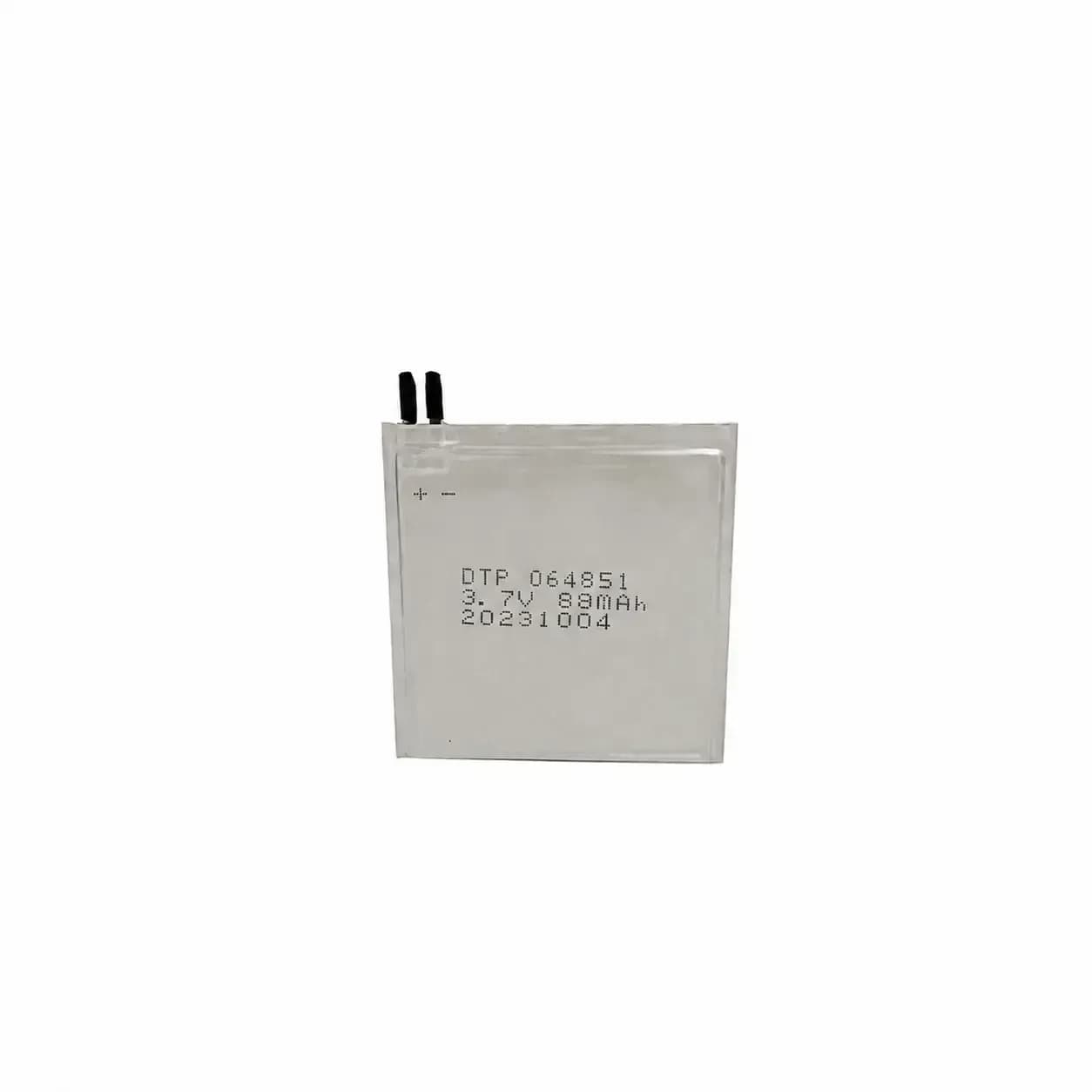
Ultra-thin lithium batteries are suitable for thin and light products such as smart badges and adult products. However, when the thickness is close to 1 mm or less, capacity, peak power, durability, safety and cost must be balanced.
The following is general battery engineering information. Specific designs should be independently verified.
1. Energy density and total capacity:
The active material space is limited and the capacity is usually small; the increased proportion of packaging materials and current collectors may also reduce the mass energy density.
- Volume limit:When the battery is compressed to an extremely thin thickness (such as less than 1 mm), the volume of its internal active materials (positive and negative electrode materials) is very limited, soThe total capacity of the battery is usually smaller, mainly suitable for low-power devices.
- Energy density:Although ultra-thin batteries can be made very light, due to the relative increase in the proportion of packaging materials (such as aluminum-plastic films) and current collectors in the battery, theirmass energy densitySometimes it's a sub-par thick battery.
2. Mechanical strength and durability:
Thin aluminum-plastic films are more susceptible to puncture, folding or squeezing; poor sealing will absorb moisture, bulge or fail.
- Vulnerability:The encapsulation layer (aluminum-plastic film) is very thin. Compared with metal-cased batteries, ultra-thin soft-pack batteries are more susceptible toPhysical puncture, compression or squeezingDamage may result in leakage or internal short circuit.
- Package reliability:It is difficult to seal the extremely thin edges. If the sealing is not tight, the electrolyte can easily absorb moisture in the air, causing the battery to bulge or fail.
