Pouch Lithium-Ion Battery Structure and Manufacturing Process
1. Pouch cells
A pouch cell uses aluminum-plastic laminate film as its packaging material. Lithium-ion cell packages are broadly divided into pouch cells and rigid-shell cells, including steel, aluminum, and some plastic housings. Pouch cells are heat-sealed, whereas rigid shells are generally welded.

2. Aluminum-plastic laminate film
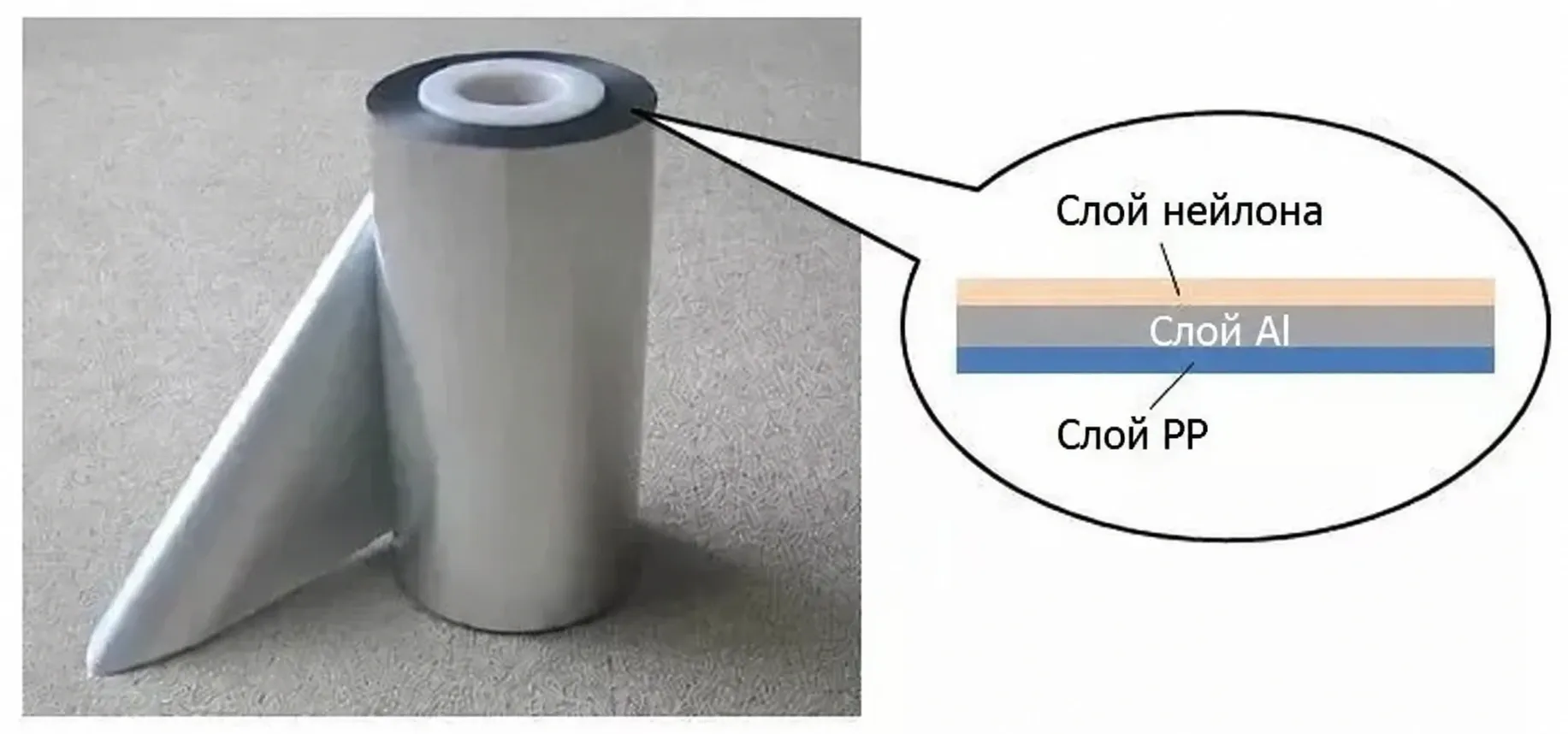
The laminate consists of nylon, aluminum (Al), and polypropylene (PP) layers. Nylon preserves shape; Al blocks moisture and provides ductility during forming; PP melts and becomes adhesive under heat, then solidifies as the seal cools. Uniform and durable bonding of the three layers is essential.

3. Film-forming process
A mold matched to the cell dimensions forms a heated pocket for the wound electrode assembly. Thin cells usually use a single pocket; thicker cells use double pockets to avoid exceeding the film deformation limit. A small extra pocket may be formed at the gas-bag area. The formed and trimmed laminate is commonly called a pocket pouch.

4. Top and side sealing
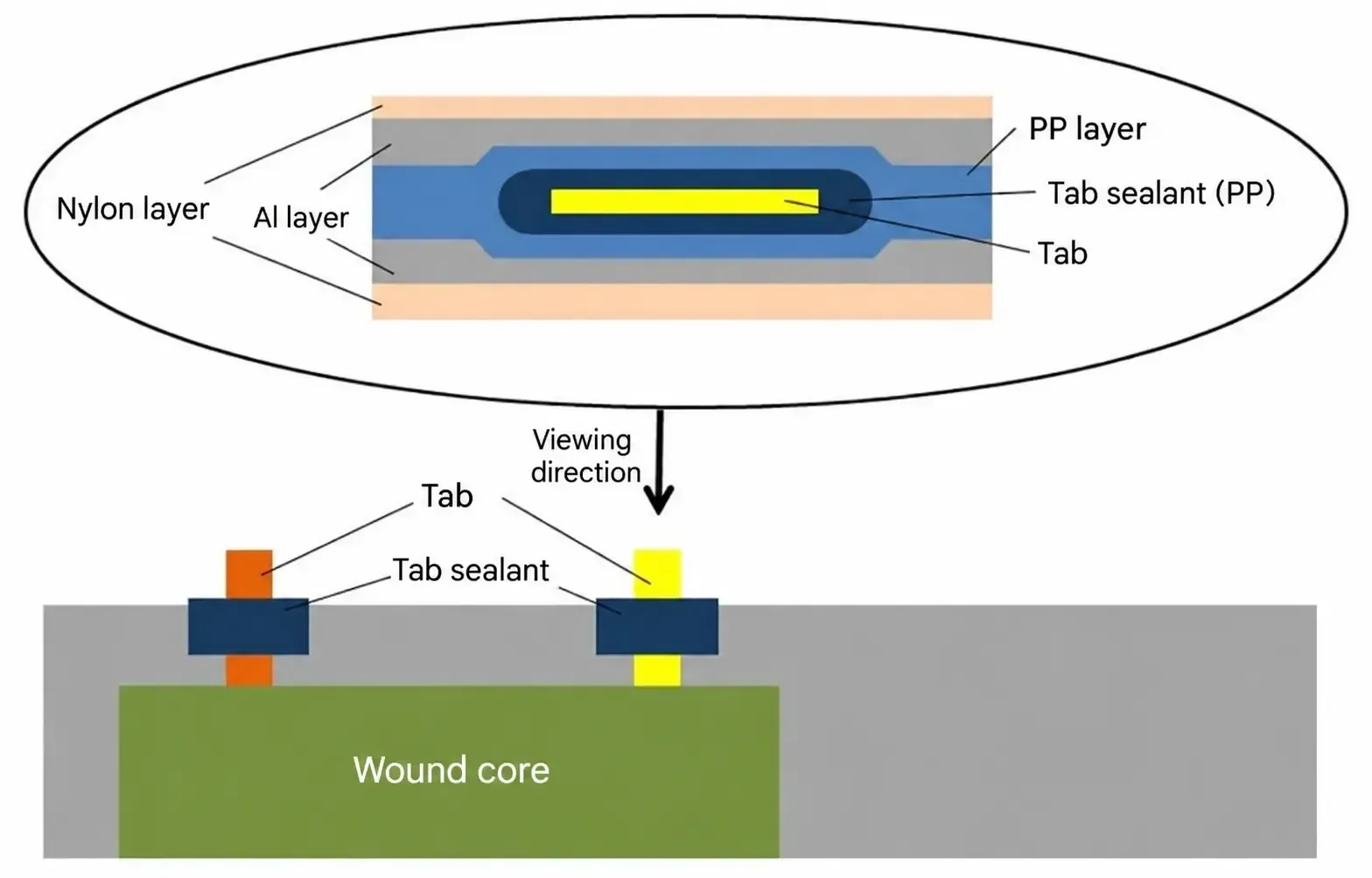
The wound assembly is placed in the pocket and the film is folded. The package includes top-seal, side-seal, first-seal, and second-seal regions. Sealing heads typically press at about 180 °C, melting the PP layers, which bond after cooling. The top seal encloses the aluminum positive tab and nickel negative tab; PP in the tab sealant bonds with the laminate PP to provide an effective seal.

5. Electrolyte filling and pre-sealing
After top and side sealing, X-ray inspection checks winding alignment, and the cell is dried to remove moisture. Electrolyte is introduced through the gas-bag opening, which is immediately pre-sealed (first seal) to isolate the cell interior from the environment.