Pouch Lithium Battery Selection Guide: How to Choose High-Temperature, Low-Temperature, Ultra-Thin, High-Voltage and Explosion-Proof Cells
Organized by operating temperature, thickness, energy density and safety requirements, this guide explains the parameters and selection points of seven pouch lithium battery types: high-temperature, low-temperature, ultra-thin, 3.87V high-voltage, LFP/LMO, long-format and silicon-carbon high-capacity.
October 20, 2026德泰新能源(Green Battery)About 6 min read
Green Battery Insights
When choosing a battery for a device, the first question is usually not "the bigger the capacity, the better." Instead, ask: how cold or hot will the device's operating environment be? How much thickness is left for the battery? How much peak current is needed? Are the safety requirements stricter than usual? Different conditions call for different cell types.
This article uses representative models from seven types of Green Battery pouch cells to explain their parameters, applications and selection points. The model specifications and test figures below come from product literature.
1.Reading the Datasheet: Key Parameters
Why charging and discharging temperatures differ
Lithium-ion batteries can usually be discharged over a wider temperature range than they can be charged. At low temperatures, lithium ions intercalate into the graphite anode more slowly, and forcing a charge at that point tends to deposit metallic lithium on the anode surface, affecting service life and safety; high temperatures, in turn, accelerate side reactions and aging. Battery University explains this in plain terms: BU-410: Charging at High and Low Temperatures. That is why datasheets list "charging temperature" and "discharging temperature" separately, and a design must satisfy both.
Voltage: nominal voltage / charge cut-off voltage
For example, "3.7V/4.2V" means a nominal voltage of 3.7V and a full-charge cut-off voltage of 4.2V. "High-voltage" chemistries with a higher cut-off (such as 4.35V or 4.45V) can store more energy in a similar volume, but they also place stricter demands on the voltage accuracy of the charger and protection board.
C-rate: converting charge and discharge currents
1C is the current that fully charges or discharges the rated capacity in 1 hour. For an 850mAh cell, 1C is 0.85A and 2C is 1.7A. For an explanation of the concept, see . The "maximum charge/discharge rate" in a datasheet is an upper limit; operating near it for long periods accelerates aging and brings more temperature rise.
Pouch Lithium Battery Selection Guide: How to Choose High-Temperature, Low-Temperature, Ultra-Thin, High-Voltage and Explosion-Proof Cells | Green Battery Blog
The lower the internal resistance, the smaller the voltage drop and heat generation at high current. Cycle life is usually written as "X cycles >80%", meaning that after X cycles at the specified charge/discharge rates, capacity still remains above 80% of the initial value. Note: cycle counts measured under different conditions cannot be compared directly. For the same model, 600 cycles at 1C versus 800 cycles at 0.5C is exactly such a difference caused by different conditions.
2.High-Temperature Pouch Batteries: For High-Temperature Storage and Discharge
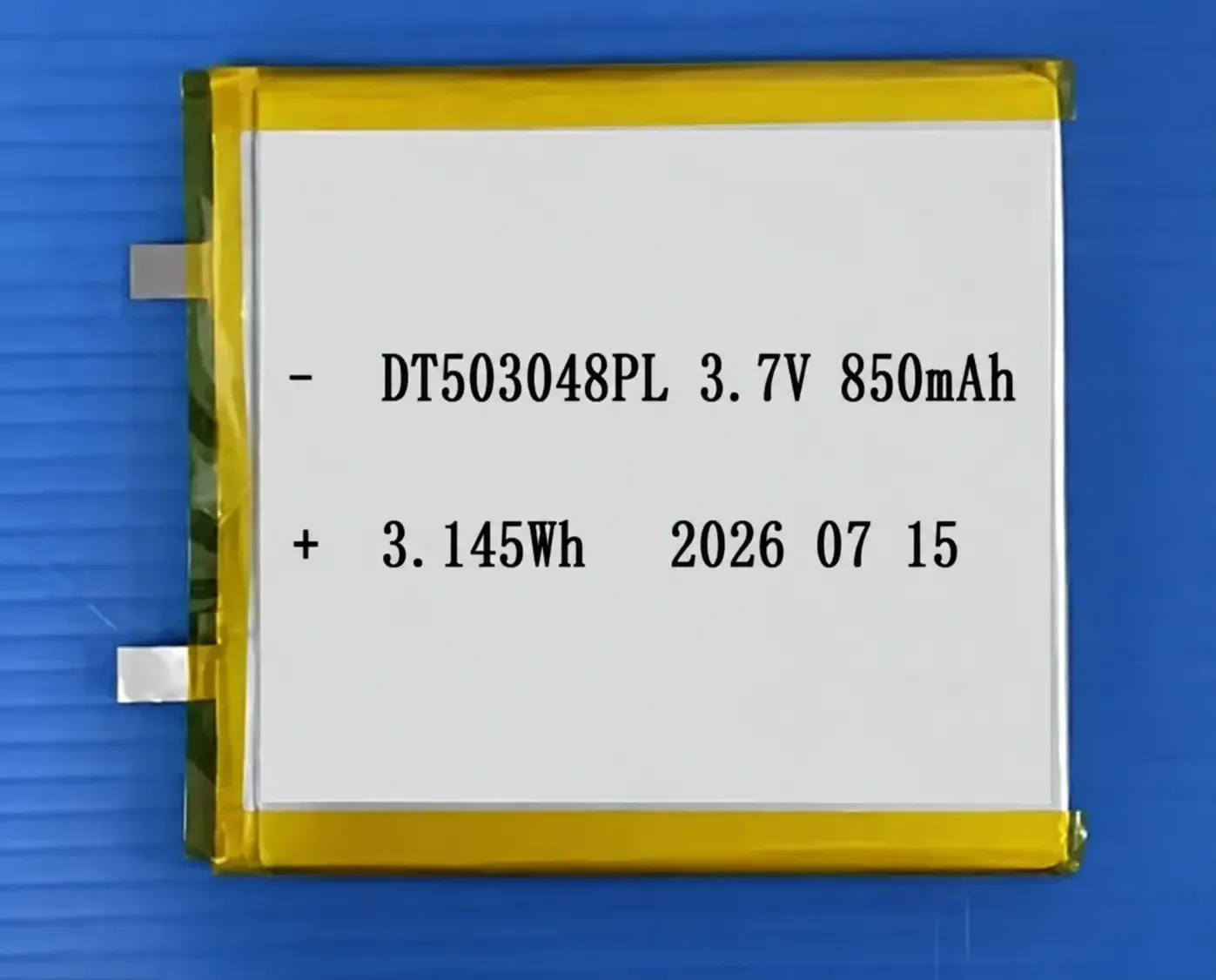
Specifications of representative model 503048PL850:
Cycle life: 600 cycles at 1C charge/discharge >80%; 800 cycles at 0.5C charge/discharge >80%
Fully charged high-temperature storage results for this model are as follows:
110°C for 4 hours: thickness swelling 4.5%; capacity retention 90%; recovered capacity 93%; appearance: no swelling, normal firmness after cooling
105°C for 8 hours: thickness swelling 4%; capacity retention 91%; recovered capacity 94%; appearance: no swelling, normal firmness after cooling
85°C for 72 hours: thickness swelling 3%; capacity retention 93%; recovered capacity 95%; appearance: no swelling, normal firmness after cooling
"Capacity retention" is the share of capacity discharged directly after storage, and "recovered capacity" is the share recovered after one more full charge-discharge cycle; the difference between the two roughly reflects reversible loss. Fully charged high-temperature storage is one of the harshest conditions for accelerated aging (see BU-808), so data of this kind is useful for comparing the high-temperature tolerance of different cells.
Typical applications: in-vehicle devices, outdoor devices exposed to direct sun, electronics located near heat sources, and similar products. Another production model is 502030PL250.
3.Low-Temperature Pouch Batteries: Discharge at -40°C and Charge at -20°C
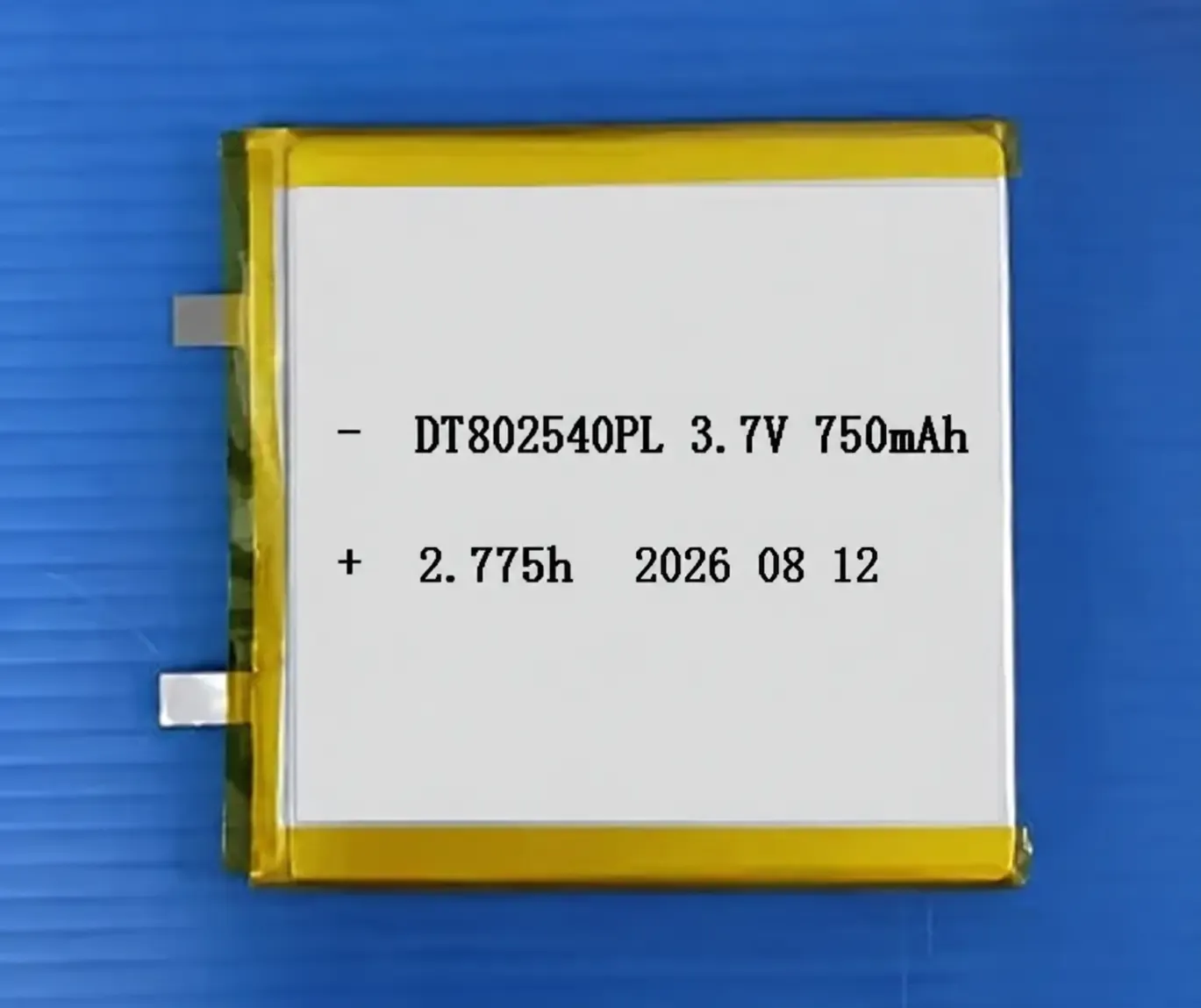
Specifications of representative model 802540PL750:
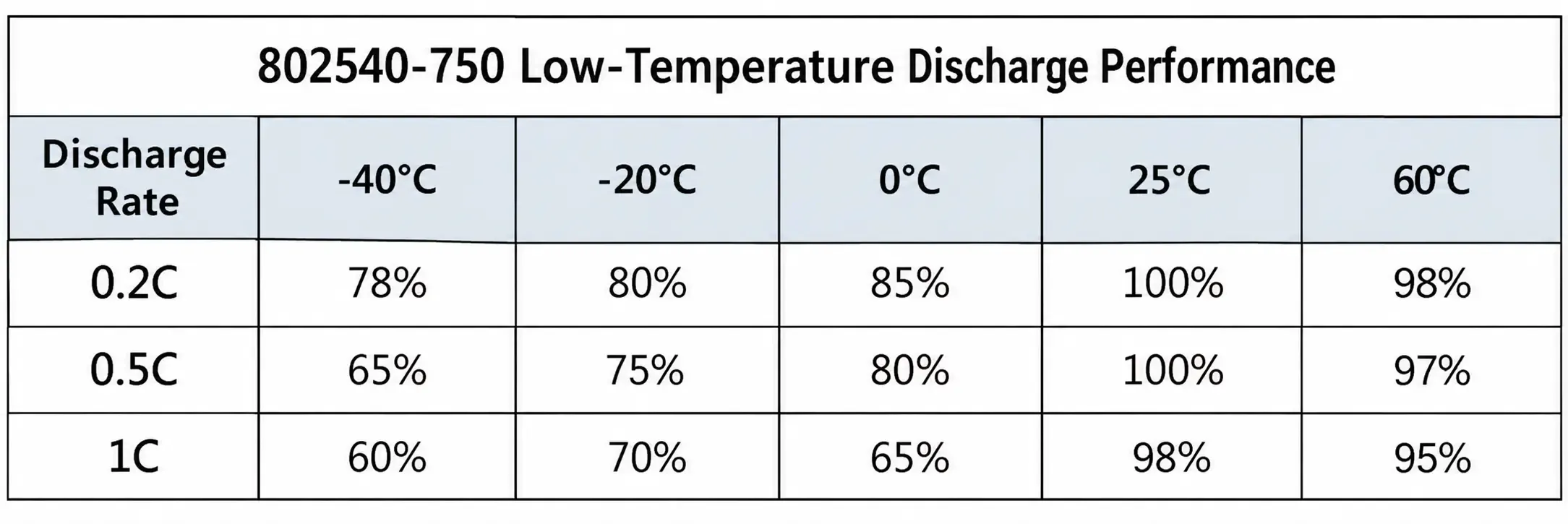
The table above shows the discharge capacity retention of the 802540-750 cell when discharged at 0.2C, 0.5C and 1C at -40°C, -20°C, 0°C, 25°C and 60°C (the labels in the table are in Chinese). From the lowest to the highest temperature, the values are 78%, 80%, 85%, 100% and 98% at 0.2C; 65%, 75%, 80%, 100% and 97% at 0.5C; and 60%, 65%, 70%, 98% and 95% at 1C.
Conventional lithium batteries are generally not recommended for charging below 0°C; this model is rated for charging at -20°C, which is its main point of difference. Keep in mind, however, that "able to operate at that temperature" does not mean "able to deliver full capacity at that temperature." Discharge capacity retention at different temperatures and rates is shown in the table above.
Typical applications: cold-chain data loggers, outdoor equipment in cold regions, and positioning and communication terminals in low-temperature environments. Other production models include 605085PL3200, 702190PL1500, 7021116PL2000, 113735PL1350 and 304040PL470.
4.Ultra-Thin Pouch Batteries: For Devices with Extremely Limited Space
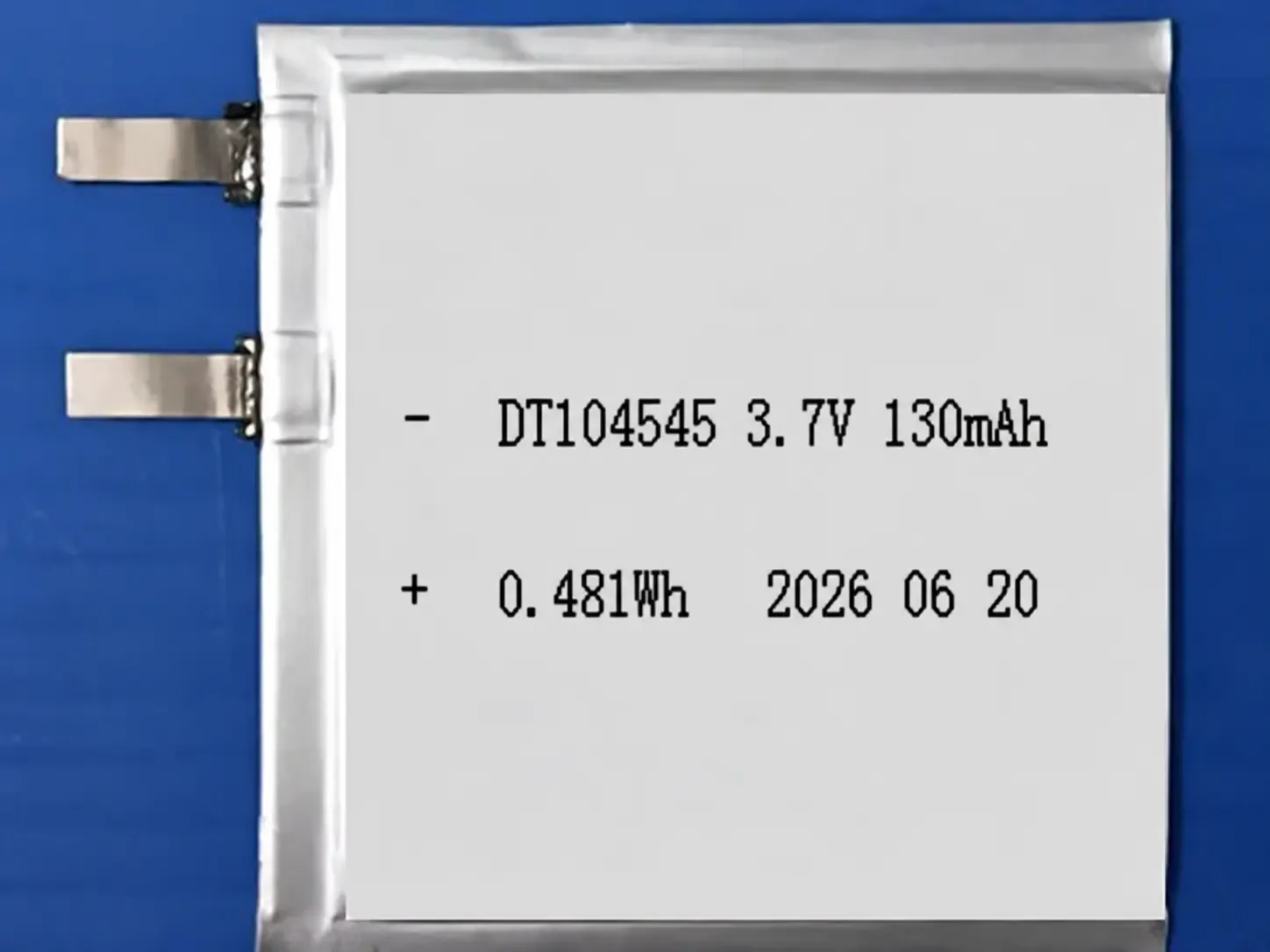
The internal resistance of ultra-thin cells is noticeably higher than that of thicker cells, a normal result of their small electrode area and thinness, so they are better suited to low-current, low-power devices.
Typical applications: smart cards, ultra-thin wearables, electronic tags and similar products. Production models include 154545PL210, 104545PL, 012323PL25 and 204843PL350.
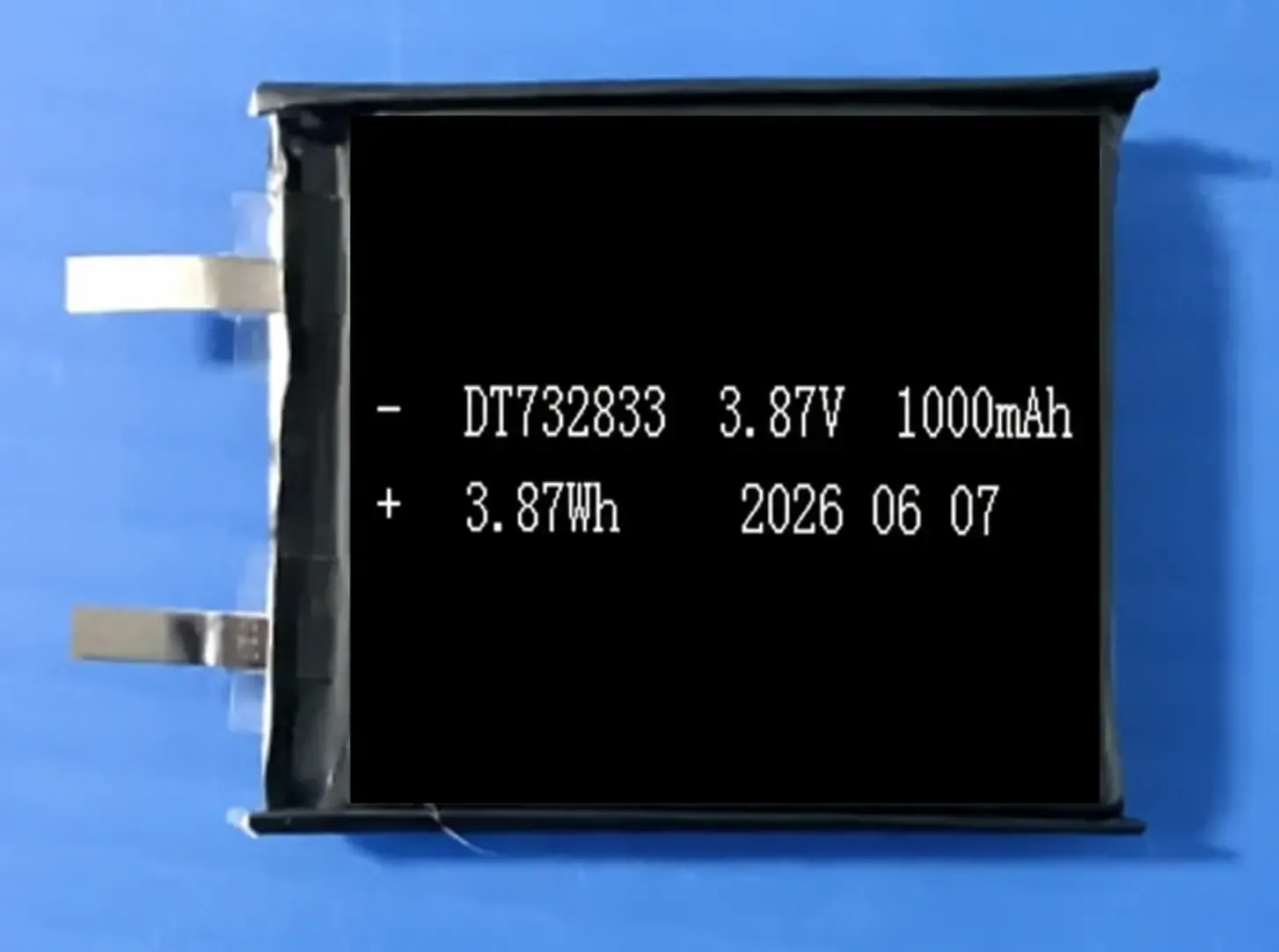
5.3.87V High-Voltage Pouch Batteries: High Energy Density and Fast Charging
Specifications of representative model 732833HV1000:
Calculated from the stated values, the nominal energy of a single cell is about 3.87V × 1.0Ah ≈ 3.87Wh. Cells with a 4.45V cut-off voltage must be paired with a charging IC and protection board that support that voltage. If a 4.2V solution is used by mistake, only part of the capacity is available; conversely, charging an ordinary 4.2V cell to 4.45V poses a safety risk.
Typical applications: volume-sensitive handheld and wearable devices that need relatively fast charging. Another production model is 642833HV920.
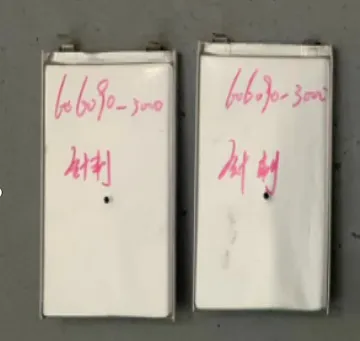
6.LFP and LMO Explosion-Proof Batteries: Safety First
Specifications of representative model 606090LFP3000 (3.2V lithium iron phosphate):
Lithium iron phosphate (LFP) cathodes offer good thermal stability and long cycle life, at the cost of lower nominal voltage and energy density; lithium manganese oxide (LMO) is likewise known for thermal stability and cost, but its cycle life is generally shorter than LFP's. For a comparison of cathode chemistries, see BU-205: Types of Lithium-ion.
Note in particular that the parameters above are for the LFP model. The LMO models have a different voltage plateau from LFP; check their own datasheets instead of applying this table.
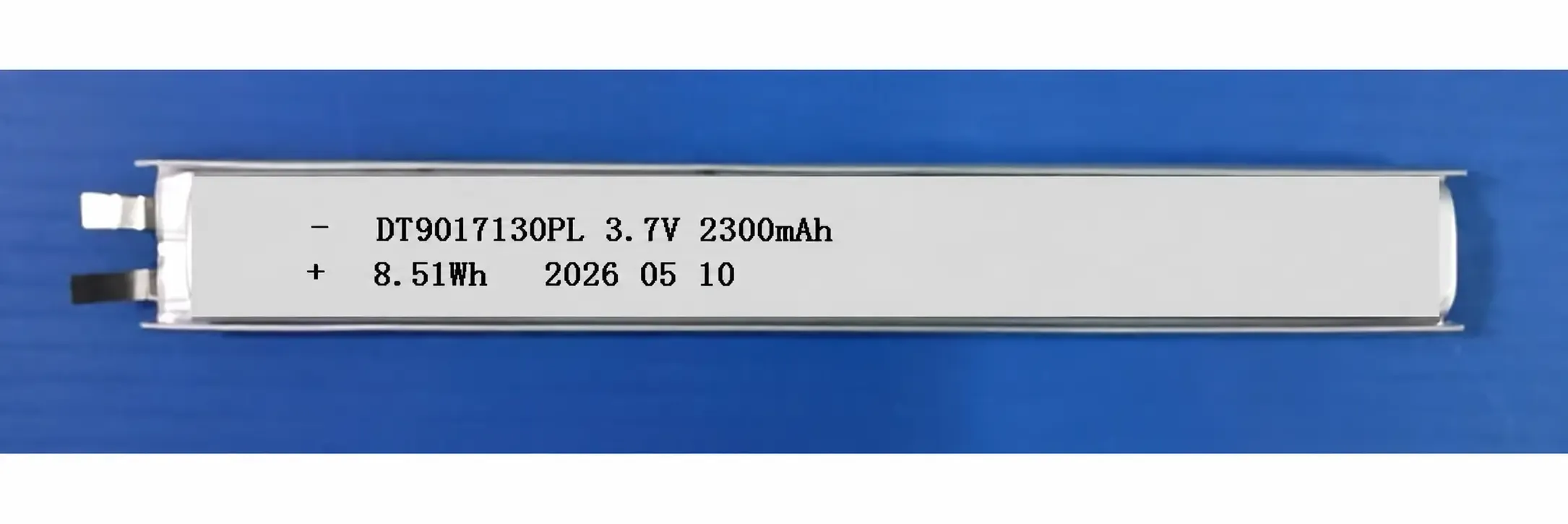
The long, slim shape fits elongated spaces such as handles, light poles and keyboard bases, and cells can also be connected in series or parallel into a battery pack as required. In series use, the capacity and internal resistance of the cells need to be matched, and balancing should be managed together with the protection board.
Typical applications: desk lamps, keyboards, beauty devices and similar products. Other production models include 8017120PL1600 and 7317120PL1500.
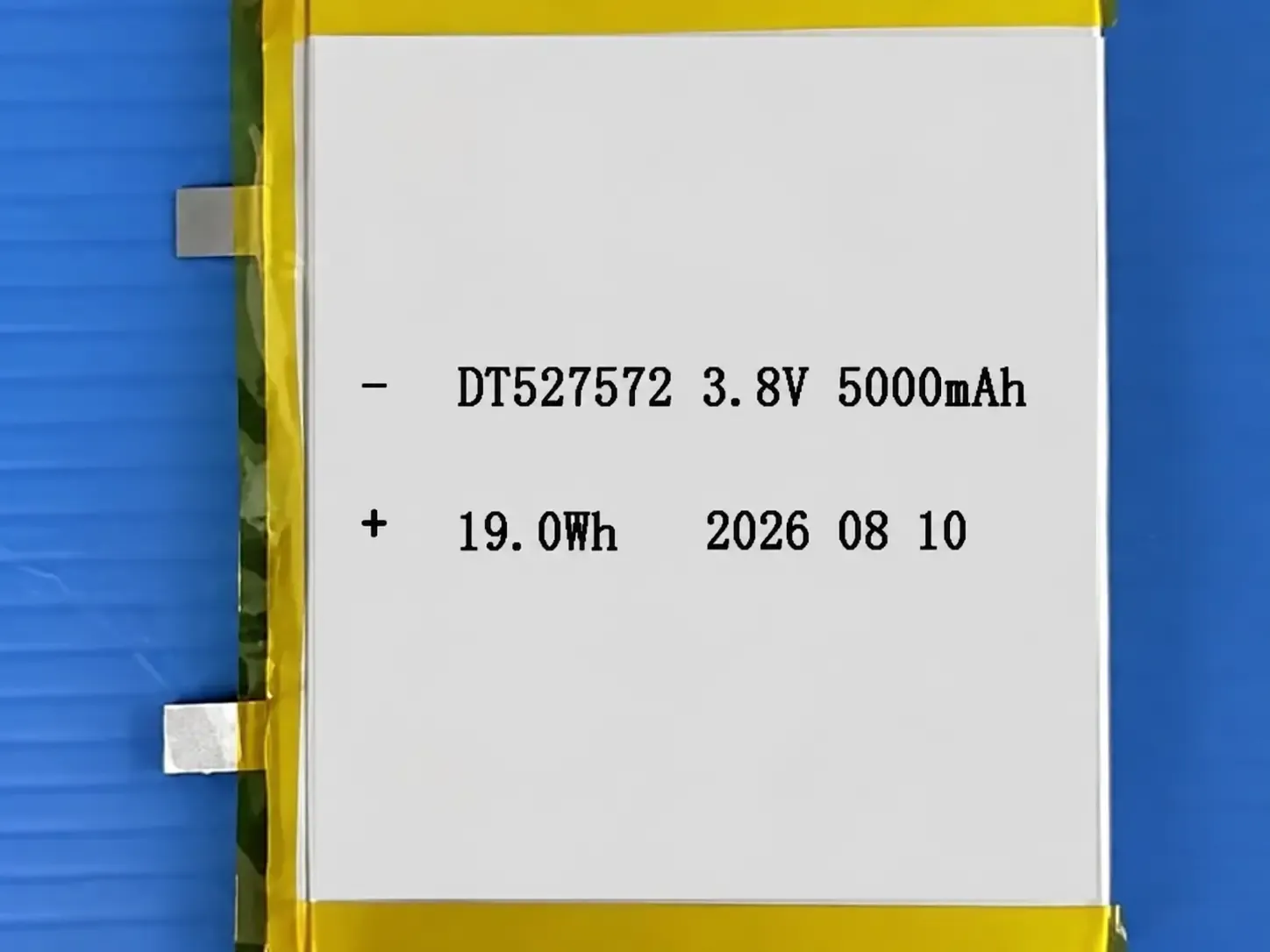
8.Silicon-Carbon Anode High-Capacity, High-Voltage Batteries: More Energy in the Same Volume
Specifications of representative model 527572HV5000:
Capacity: 5000mAh
Volumetric energy density: 677Wh/L
Voltage: 3.8V / 4.35V
Discharge temperature: -20°C to 60°C
Charge temperature: 0°C to 45°C
Charge/discharge current: 2500mA / 5000mA (the literature lists max 1C charge / 1.5C discharge)
Internal resistance: 35 to 45mΩ
Cycle life: 500 cycles at 0.5C charge / 0.5C discharge >80%; thickness swelling <6% after 500 cycles
Silicon-based materials have a theoretical lithium storage capacity far higher than graphite, but their volume changes substantially during charge and discharge, and cycling-induced swelling has long been their main challenge. The product literature also lists the cycle swelling rate. If the model number is read by the common naming convention as 5.2mm thick × 75mm wide × 72mm long, then 3.8V × 5Ah = 19Wh, divided by about 0.0281L, gives about 677Wh/L, consistent with the stated value. Note that these dimensions are inferred from the model number; the actual dimensions are those in the datasheet.
Typical applications: portable devices that need long runtime and have fixed internal space. Another production model is 462870HV720.
9.Choosing Among the Seven Cell Types: A Comparison Table
Long-term high temperature or high-temperature storage: type to consider first: high-temperature; key points to confirm: storage and cycling data at the target temperature
Charging or discharging still needed below 0°C: type to consider first: low-temperature; key points to confirm: low-temperature capacity retention, low-temperature charging rate
Extremely little thickness space: type to consider first: ultra-thin; key points to confirm: whether the operating current is within its rate range
Small volume with fast charging: type to consider first: 3.87V high-voltage; key points to confirm: whether the charging IC and protection board support 4.45V
Safety first, long cycle life: type to consider first: LFP / LMO; key points to confirm: system voltage compatibility, safety test reports
Slim space or pack assembly needed: type to consider first: long type; key points to confirm: cell matching and balancing scheme
High capacity, high energy density: type to consider first: silicon-carbon high-capacity; key points to confirm: cycle swelling and space reserved in the structure
10.Selection and Sample Checklist
Define the operating conditions: minimum and maximum operating temperatures, ambient temperature during charging, peak and continuous current, available dimensions (including swelling margin).
Request the formal datasheet: confirm model, dimensions, capacity and test conditions against the datasheet; the product brochure is only a preliminary reference.
Request test reports: if the project requires certification or export, confirm whether the cell has test reports for the relevant standards, such as IEC 62133-2, commonly used for lithium batteries in portable devices. Do not assume the product has already passed.
Test under your operating conditions: measure capacity, temperature rise and cycling at the target temperatures and rates, covering at least the harshest operating conditions.
Match the charging and protection circuits: the cut-off voltage, charging temperature protection (NTC) and overcurrent protection must all match the cell specifications.
11.FAQ
Can low-temperature lithium batteries be charged at -40°C?
According to the product specifications, the representative low-temperature model has a discharge lower limit of -40°C and a charge lower limit of -20°C, so charging at -40°C is not supported. Below the rated charging temperature, heat the battery first or pause charging.
Can a high-voltage (4.45V) battery use an ordinary 4.2V charger?
It can be charged, but only part of the capacity is available. Conversely, never use a 4.45V solution to charge an ordinary 4.2V cell. The charging solution should follow the cut-off voltage in the cell datasheet.
Does a cycle life of 1500 cycles versus 500 cycles mean the former is more durable?
Only when the cycling conditions are the same can they be compared directly. The 1500 cycles of the LFP model and the 500 cycles of other models use the same charge/discharge rates (0.5C charge / 1C discharge), so they can serve as a reference for the difference between chemistries. Actual service life, however, is also affected by temperature, depth of discharge and charging strategy.
Does "passed nail penetration" in the product literature mean the cell has safety certification?
No. Certification requirements depend on the target market and standard, and testing and reporting must be done by a qualified body.
Can the datasheet data be used directly for product design?
The figures can support initial screening; use the formal datasheet and project test results when finalizing the design.
Procurement & Engineering Solutions
Related Battery Categories & Manufacturing Capacities
Looking to evaluate specifications or request custom engineering samples? Explore our verified product lines below: