
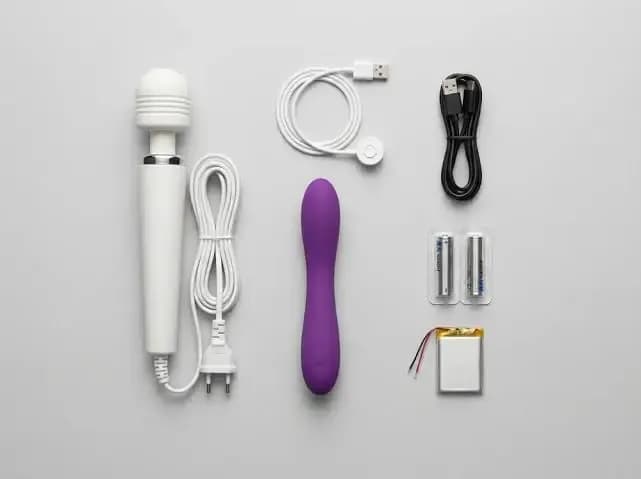
Ultra-thin lithium polymer batteries are often the only practical choice when an electric massage wand must fit into a slim, lightweight housing. However, making a cell thinner—especially below about 1 mm—means balancing capacity, instantaneous power, durability, safety and cost.

1. Energy density and total capacity
A very thin cell has limited volume for cathode and anode active materials, so its total capacity is usually modest and best suited to low-power designs. Although it is light, packaging film and current collectors take up a larger share of the cell, which can reduce gravimetric energy density compared with a standard-thickness cell.
2. Mechanical strength and durability
Ultra-thin pouch cells use thin aluminum-plastic laminate rather than a rigid metal case. They are more vulnerable to puncture, bending and compression, which can cause leakage or internal short circuits. Edge sealing is also more demanding: inadequate sealing allows moisture ingress and may cause swelling or failure.
3. Charge and discharge performance
To achieve an ultra-thin profile, electrodes and tabs are often made thinner, increasing DC internal resistance (DCR). Higher resistance limits peak-current capability. If the product requires strong vibration pulses or sustained wireless transmission, voltage sag can become noticeable.
4. Manufacturing process, cost and cycle life
Thin electrodes require tight control of stacking alignment, welding and electrolyte filling. Yield losses can be higher, making ultra-thin cells more expensive. Repeated charge/discharge expansion and contraction may also accelerate loss of active material and shorten cycle life.
5. Thermal management
A thin cell has a relatively large surface area, but a fully sealed compact product has little room for air circulation. Heat generated in operation can remain trapped, accelerating battery aging.
Selection guidance
Specify the real load profile first: average current, peak current, runtime, charging method, available thickness, mechanical protection and expected cycle life. For electric massage wands, protect the pouch cell from compression, design conservative peak-current margins, and validate temperature rise and voltage drop under the strongest vibration mode. Ultra-thin LiPo is a space-for-performance trade-off; the right choice is the thinnest cell that still meets capacity, safety and durability requirements.