
Lithium battery manufacturing combines materials science, mechanical engineering, electrochemistry, and quality management. The complete process generally covers electrode production, cell assembly, formation, testing, and packaging. Process stability at every step affects capacity, resistance, cycle life, and safety.
1. Electrode production
- Slurry preparation

Positive electrode materials may include lithium cobalt oxide, ternary materials, or lithium iron phosphate, while graphite or silicon-carbon materials are commonly used for the negative electrode. Active materials are mixed with conductive agents, binders, and solvents to form a uniform and stable slurry.
- Coating and drying
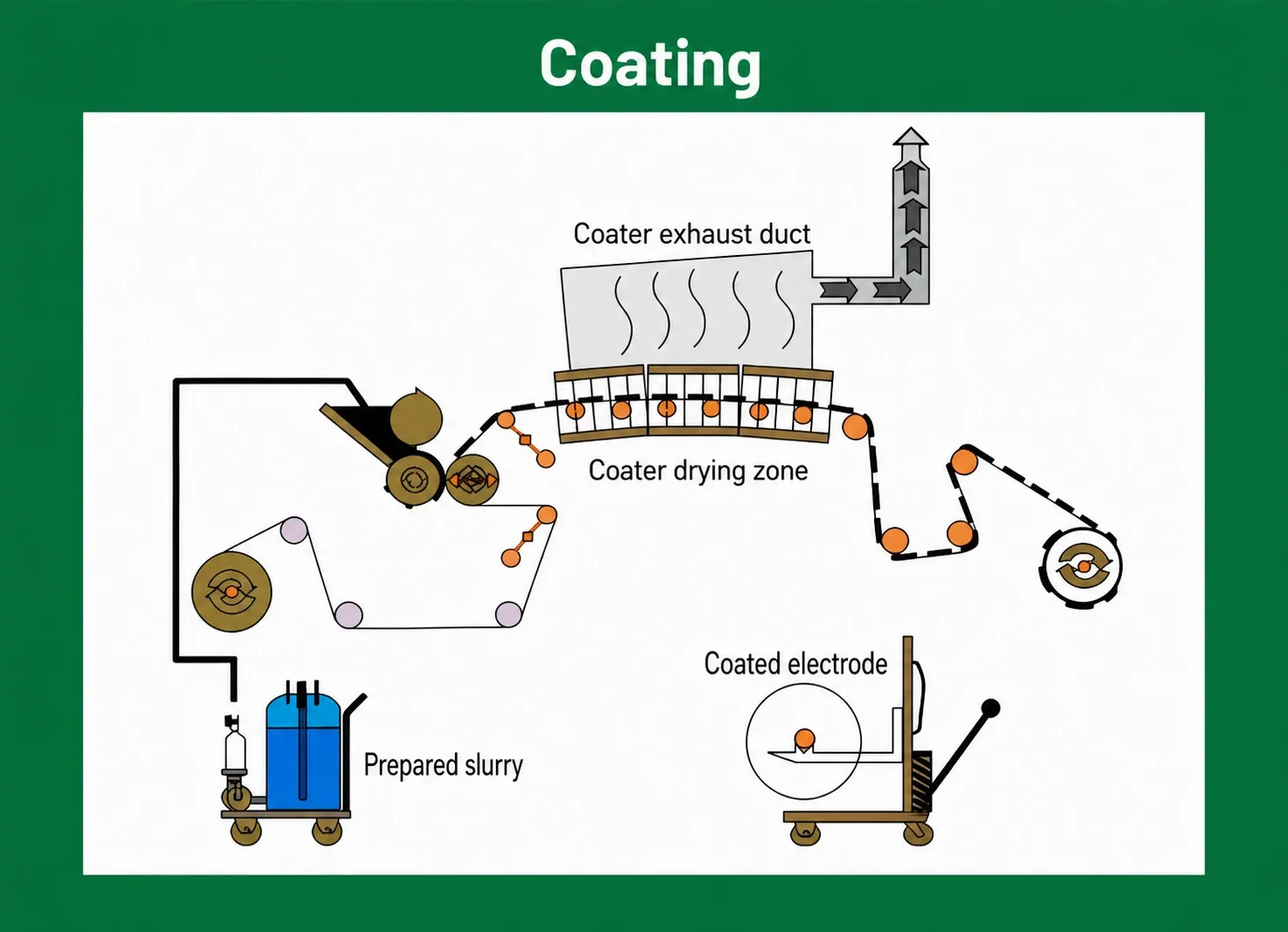
The positive slurry is coated onto aluminum foil and the negative slurry onto copper foil. The coated foils pass through a drying oven to remove solvent and form continuous electrode rolls. Coating thickness, loading, and drying temperature must be monitored.
- Calendering, slitting, and notching
Dry electrodes are compressed to reduce thickness, increase compaction density, and improve adhesion. They are then slit and notched to the dimensions and tab geometry required by the cell design.
2. Cell assembly
- Tab welding
Positive and negative tabs are connected to their respective current collectors. Weld strength, electrical continuity, and possible short circuits are checked.
- Stacking or winding
Depending on the cell design, electrodes and separators are stacked or wound in the specified sequence. The separator prevents direct contact while allowing lithium ions to pass through. Alignment accuracy is essential for resistance, capacity, and safety.
- Packaging, baking, and electrolyte filling
