
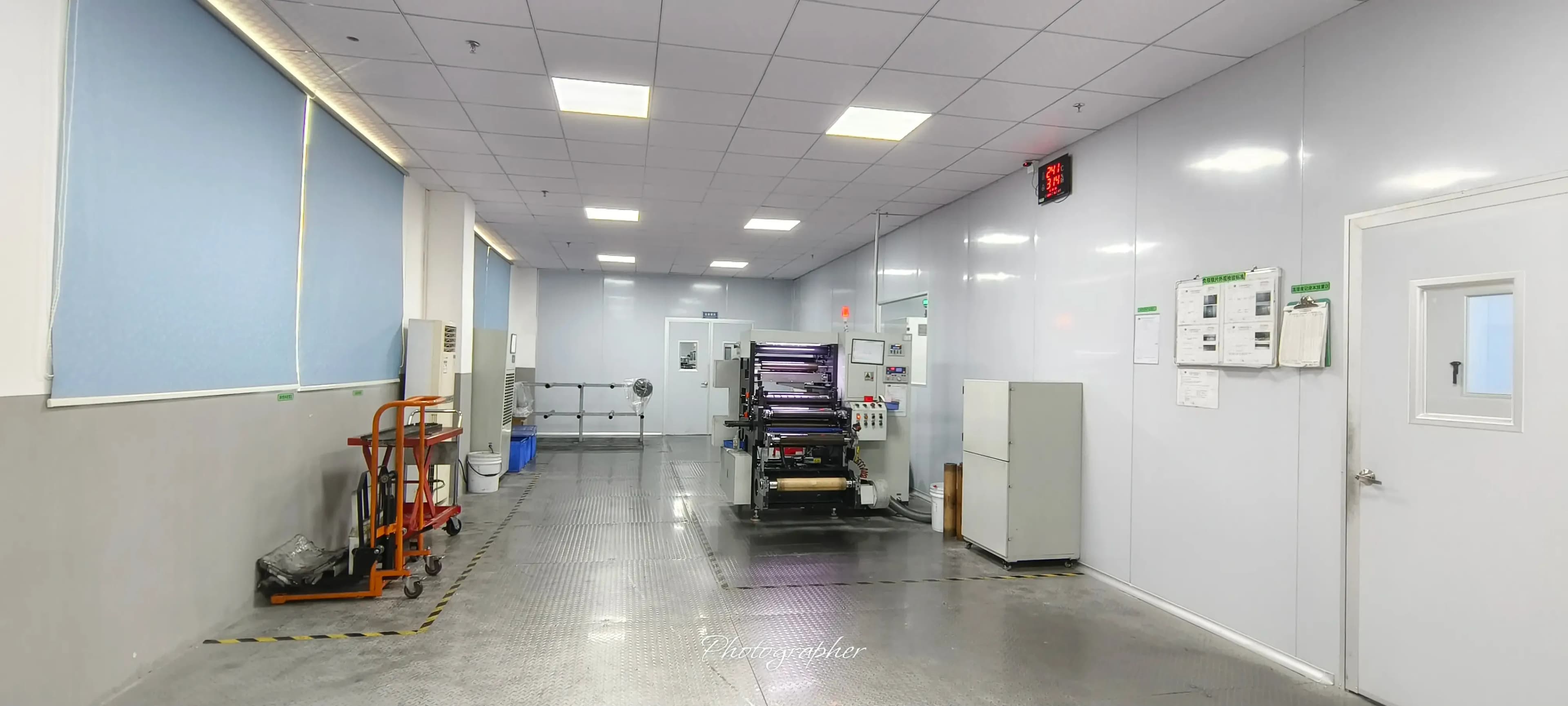
Manufacturing defects are material, process or equipment abnormalities introduced during cell production. They can affect consistency, cycle life, rate capability and safety. The complete process is commonly divided into electrode preparation, cell assembly, and packaging and formation. A closed-loop system from incoming inspection to final testing helps detect and correct defects before they spread to downstream operations.
1. Electrode preparation
Slurry mixing disperses active materials, conductive additives, binders and processing aids in a solvent to form a stable slurry. Metallic particles, foreign matter or excessive moisture in incoming materials may introduce contamination. Incorrect formulation, addition sequence, shear speed, temperature, vacuum level or mixing time can cause agglomeration, sedimentation, viscosity drift and trapped bubbles. Control should cover powder screening and cleanroom practices, solids content and viscosity windows, mixing energy and deaeration. Online records of viscosity, temperature and vacuum, supplemented by microscopy or particle-size analysis, help confirm batch stability.
Coating and drying apply the slurry to copper foil for the anode or aluminum foil for the cathode, then remove solvent to form the coating. Agglomerates, particles, pinholes, streaks, edge build-up and areal-density variation are associated with slurry condition, coating gap, web tension, line speed and feed stability. These defects create local current-density non-uniformity, reduce rate perform
ance and accelerate capacity fade. Drying requires coordinated control of zone temperature, airflow, exhaust and line speed. Excessively rapid evaporation can cause surfa
ce skinning, residual solvent, cracking or poor adhesion. Residual moisture and solvent should be controlled within the process window by sampling or in-line monito

ring.
Calendering compresses the coating to adjust porosity, thickness and energy density. A mismatch among roll pressure, nip, speed, temperature and web tension may produce wrinkles, imprints, cracks, powder loss or web breaks. Over-compaction can hinder electrolyte wetting and ion transport, while under-compaction can reduce contact quality and energy density.
2. Cell assembly


